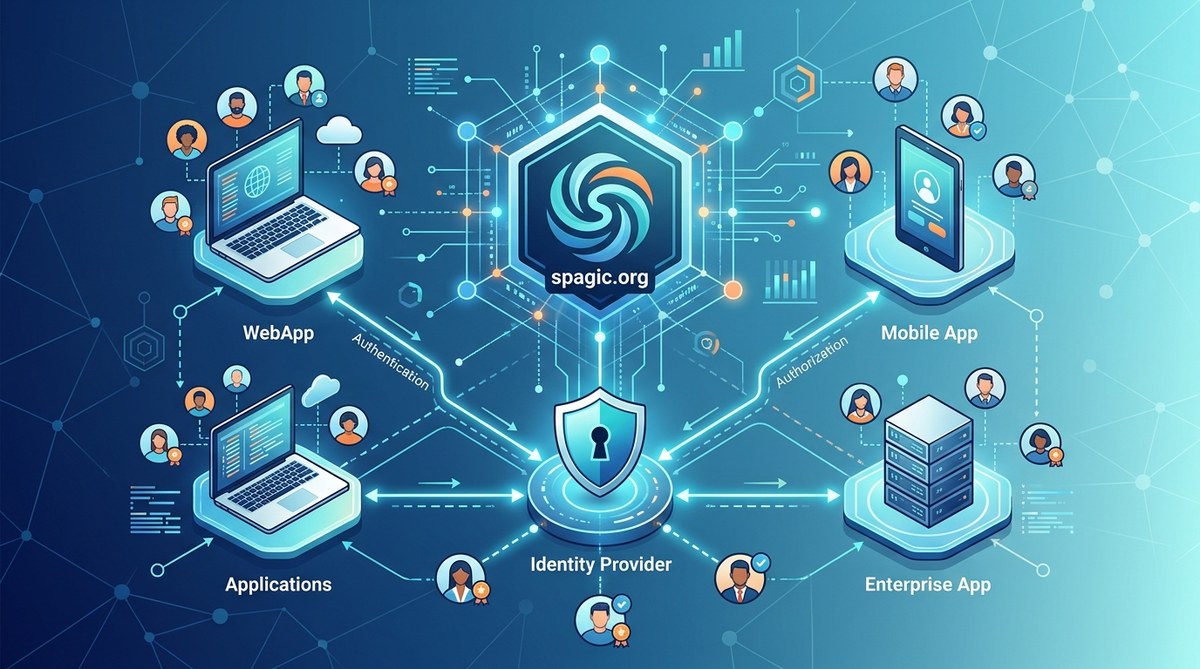
In today’s world of cloud based apps, partner ecosystems, and a growing array of devices, the way we handle authentication and authorization matters more than ever. Federated identity management (FIM) helps organizations extend trusted identities across boundaries, letting users access services in multiple domains with a single set of credentials. If you manage multi domain access for customers, partners, or internal teams, understanding FIM is essential. This article from spagic.org, your middleware education platform, breaks down the what, why, and how of federated identity management in plain language with practical guidance for modern IT environments.
What is Federated Identity Management
Federated identity management is a framework that enables users to authenticate in one domain and gain access to resources in other trusted domains without re-entering credentials. At its core, FIM is about trust and secure sharing of identity information across security domains. It relies on well defined agreements, standards, and technical components that allow different organizations to recognize and accept each other’s identities.
Core idea
- A user authenticated by a trusted source in one domain (the Identity Provider, IdP) can be granted access to services in another domain (the Service Provider, SP) without a separate login.
- The process hinges on exchanging identity assertions, tokens, and metadata that prove who the user is and what they are allowed to do.
- Federated identity creates a seamless user experience across organizations and environments while maintaining centralized control over identity data and access policies.
Key players
- Identity Provider (IdP): The system that authenticates the user and issues identity assertions.
- Service Provider (SP): The application or service that consumes assertions to authorize access.
- Trust Relationship: A formal agreement and technical setup that allows the IdP and SP to communicate securely.
- Federation Gateway or Federation Service: An optional middleware layer that streamlines cross domain trust and token exchange.
Core protocols and standards
- Security Assertion Markup Language (SAML) 2.0: A widely adopted standard for exchanging authentication and authorization data between IdPs and SPs.
- OpenID Connect (OIDC) and OAuth 2.0: Modern protocols built on OAuth 2.0 for user authentication and delegated authorization, often used in web and mobile contexts.
- WS-Federation: A legacy but still relevant protocol used in some enterprise environments, especially within Windows ecosystems.
- Other supporting standards: XML signatures, SAML assertions, JSON web tokens (JWT), and federation metadata documents that describe trust relationships.
How FIM works under the hood
Understanding the flow helps when you design or troubleshoot a federation in production.
Trust relationships
- A trust framework is established between IdP and SPs. This includes federation metadata, certificates for signing and encryption, and agreed upon claims.
- Trust is often anchored in a common authority or a trusted federation partner. If the trust is broken or a certificate expires, access can be disrupted.
Identity Provider and Service Provider roles
- IdP: Validates user credentials, applies policy, and issues a secure token or assertion about the user’s identity and attributes.
- SP: Receives the token, validates it, enforces access control based on claims, and grants or denies resource access.
- In many scenarios, a user is redirected from the SP to the IdP for authentication, then redirected back with a token that proves identity.
Federation metadata and tokens
- Metadata files describe endpoints, supported bindings, and certificate information. These files are exchanged to configure trust automatically.
- Tokens or assertions (SAML, JWT, or similar) carry claims about the user, such as user id, group memberships, roles, and other attributes needed by the SP.
Assertion formats and flows
- SAML assertions are XML based and commonly used in enterprise SSO scenarios.
- JWT based tokens are typical with OIDC and OAuth 2.0 flows for web and mobile apps.
- The exact flow can vary by protocol but typically involves: authentication at IdP, redirection to IdP, issuance of a token, token delivery to SP, and access decision at the SP.
High level flow overview
- User attempts to access a protected resource on the SP.
- SP redirects user to the IdP for authentication.
- IdP authenticates the user and issues a token or assertion containing identity and attributes.
- IdP sends the token to the SP, often via the user’s browser or back channel.
- SP validates the token, enforces access policies, and grants access.
Benefits of Federated Identity Management
FIM provides tangible value across people, processes, and technology.
User experience improvements
- Single sign on across multiple domains reduces password fatigue.
- Faster access to resources improves productivity and satisfaction.
- Consistent authentication experience across cloud and on premises.
Security improvements
- Centralized policy enforcement allows uniform security controls.
- Reduced password reuse and phishing exposure by limiting the need for multiple credentials.
- Stronger risk management through centralized monitoring, anomaly detection, and revocation capabilities.
IT efficiency and governance
- Centralized user provisioning and de provisioning across connected systems.
- Streamlined onboarding and offboarding for contractors, partners, and affiliates.
- Easier audit trails and compliance reporting across federated domains.
Scalability and cross domain collaboration
- Seamless access for employees, partners, and customers across SaaS, on premises, and hybrid environments.
- Easier integration of new applications into a federated ecosystem without duplicating identities.
Federated Identity vs SSO
A common question is how FIM relates to SSO. They are related but not identical.
Distinguishing features
- SSO focuses on a seamless authentication experience across multiple applications from the user perspective.
- FIM focuses on the governance, trust, and cross domain authentication and authorization across organizational boundaries.
- SSO can be implemented within a single domain or across federated domains; FIM is the broader framework that enables cross domain SSO through trusted IdP and SP relationships.
When to use each
- Use SSO when your goal is to simplify sign in to multiple apps in a single organization or trusted ecosystem.
- Use FIM when you need secure access across multiple organizations, partners, or cloud environments with strict governance and cross domain trust.
Technologies and standards that power FIM
A modern federation uses a combination of protocols and standards to cover different use cases.
SAML 2.0
- Widely supported in enterprise apps and portals.
- Well suited for browser based web apps and intranet portals.
- Pros: Mature, robust, supports strong enterprise policy controls.
- Cons: More complex XML based messages; less ideal for mobile native apps without adapters.
OpenID Connect and OAuth 2.0
- OIDC builds on OAuth 2.0 to provide authentication data as JWTs, suitable for modern web and mobile apps.
- Pros: Simple developer experience, strong ecosystem, great for API driven architectures.
- Cons: Requires careful scope and token lifetime management to avoid over permissive access.
WS-Federation
- Found in some Microsoft centric environments and older federations.
- Pros: Works well with Windows Active Directory ecosystems.
- Cons: Less common in newer cloud native apps.
LDAP and SCIM in federation
- LDAP directories often underpin IdP user stores; SCIM supports provisioning across systems.
- Federation benefits when you can synchronize attributes and manage lifecycle centrally.
Federation protocols compatibility
- Many organizations operate hybrid environments that mix SAML, OIDC, and WS-Fed. A flexible IdP/SP pair supports multiple protocols to avoid vendor lock in.
- Metadata exchange and certificate management are critical for secure interoperability.
Common use cases and scenarios
FIM shines in environments with multiple domains, partners, or ecosystems requiring secure cross domain access.
Cross organization B2B access
- Partners can access shared services without creating separate accounts.
- Trust is established via federation metadata, allowing automated provisioning and revocation.
Cloud and SaaS adoption
- Employees access SaaS apps from multiple vendors using a centralized IdP.
- Reduces password risk while keeping access policies consistent across apps.
Healthcare and government in multi domain
- Sensitive data requires strong auditing, role based access, and policy enforcement across partner networks.
- Federation enables compliant data sharing while maintaining control.
IoT and edge devices
- Federated identity can extend to devices or services using token based trust, enabling secure machine to machine authentication and authorization across networks.
Implementation patterns and best practices
A thoughtful approach reduces risk and increases the likelihood of a successful federation.
Choose IdP strategy
- Decide if you will rely on a single enterprise IdP or a federated IdP network with partner IdPs.
- Consider multi tenancy requirements, scalability, and governance needs.
Federation metadata management
- Maintain up to date metadata documents across all participants.
- Automate certificate rotation and trust updates to prevent outages.
Token security and signing
- Sign and validate tokens to ensure integrity.
- Enforce short token lifetimes and implement refresh strategies without compromising user experience.
- Use encryption for sensitive claims where necessary.
Auditing and compliance
- Centralize logs of authentication events and access decisions across domains.
- Implement automated alerts for suspicious sign in patterns or policy violations.
Onboarding and offboarding
- Provision users in a consistent way across IdP and SPs.
- Remove or suspend access promptly when a user leaves the organization or a partner relationship ends.
Identity life cycle governance
- Define policies for attribute release, consent, attribute filtering, and privacy controls.
- Regularly review permissions and reconcile with role changes.
Challenges and risks
No solution is perfect. Anticipate these realities when planning federations.
Trust management and revocation
- Managing trust relationships across many participants can be complex.
- Revoking access quickly requires robust governance and automation.
Privacy and data minimization
- Federated assertions should release only the attributes needed by the SP to perform its function.
- Balance convenience with privacy and data protection requirements.
Mixed cloud and on premise environments
- Hybrid architectures require careful network design, identity stores, and synchronization strategies.
- Latency and reliability can vary across domains; plan for graceful degradation.
Availability and disaster recovery
- A federated architecture depends on the continued operation of IdP and metadata services.
- Implement redundancy, failover, and disaster recovery plans to minimize downtime.
Measuring success with metrics
To justify investment and continuous improvement, track meaningful metrics.
Adoption metrics
- Number of federated connections, onboarding speed, and time to access for new apps.
- Rate of user sign in across domains and the breadth of supported services.
Security metrics
- Token lifetimes, failed sign in attempts, and policy violations.
- Time to revoke compromised credentials and automated threat responses.
Operational metrics
- Change lead time for federation metadata updates, certificate rollover times, and incident response times.
- System availability and cross domain latency measurements.
The future of FIM in modern IAM
Federated identity continues to evolve as organizations adopt more cloud services and embrace new identity paradigms.
Decentralized identity influence
- Emerging models aim to give individuals more control over their own identity data while still enabling cross domain trust.
- Blockchain inspired concepts and verifiable credentials are shaping future federation strategies.
AI assisted risk scoring
- Machine learning can help detect anomalous authentication patterns across federated domains.
- AI can optimize policy decisions and reduce false positives while maintaining security.
Governance and policy as code
- Treat identity governance policies as code that can be version controlled and tested.
- automate policy deployment across IdP SP ecosystems for consistency and auditability.
Getting started with Federated Identity Management
If you are ready to embark on a federated journey, here is a practical approach to get started.
Step by step checklist
- Define your federation goals: cross domain access, partner enablement, or cloud migration.
- Identify key IdP and SP participants and map trust relationships.
- Choose the primary federation protocol family (SAML, OIDC, or WS-Fed) based on application types.
- Establish a federation strategy for provisioning, attribute release, and lifecycle governance.
- Implement a pilot with a small set of apps and users to validate flows.
- Roll out to additional apps and organizations in waves, updating metadata as you go.
- Build monitoring, auditing, and incident response processes into the federation framework.
- Review privacy controls and data minimization settings to stay compliant.
Real world pitfalls to avoid
- Overly broad attribute release that increases risk without clear benefit.
- Relying on a single IdP for everything without redundancy plans.
- Infrequent certificate management leading to expired certificates and failed sign in.
- Underestimating the complexity of multi domain onboarding and offboarding.
Quick references and further reading
- SAML 2.0 and OIDC documentation from major providers
- Best practices for trust management in federations
- Identity governance and administration (IGA) strategies for federations
- Cross domain access compliance guidelines
Why this matters for spagic.org readers
As a middleware education platform, spagic.org helps you understand how to design and implement robust integration strategies. Federated identity management is a cornerstone for modern IAM in hybrid cloud environments, enabling secure cross domain access for employees, partners, and customers. By learning the core concepts, participants can evaluate federation readiness, select the right protocol mix, and build scalable governance models that align with organizational risk tolerance and compliance requirements.
To summarize, federated identity management is not just about letting users sign in once. It is a disciplined, standards based approach to trust, security, and interoperability across organizational boundaries. It empowers you to:
- Centralize authentication policy while distributing access across multiple services
- Reduce password sprawl and improve user experience for multi domain access
- Strengthen security with standardized tokens, signed assertions, and auditable events
- Scale across cloud, on premises, and partner ecosystems with governance and automation
If you are exploring how to implement FIM in your environment, start with a clear picture of IdP SP roles, the desired protocols, and the federation metadata that binds your ecosystem together. With careful planning and the right set of tools, federated identity management can become the backbone of secure, scalable, and user friendly access for your organization.